Autonomous AI Agents: Architecting Deterministic Multi-Agent Task Orchestration
An architectural deep dive into agentic tool execution, hierarchical planning loops, stateful error recovery, and enterprise operational automation.
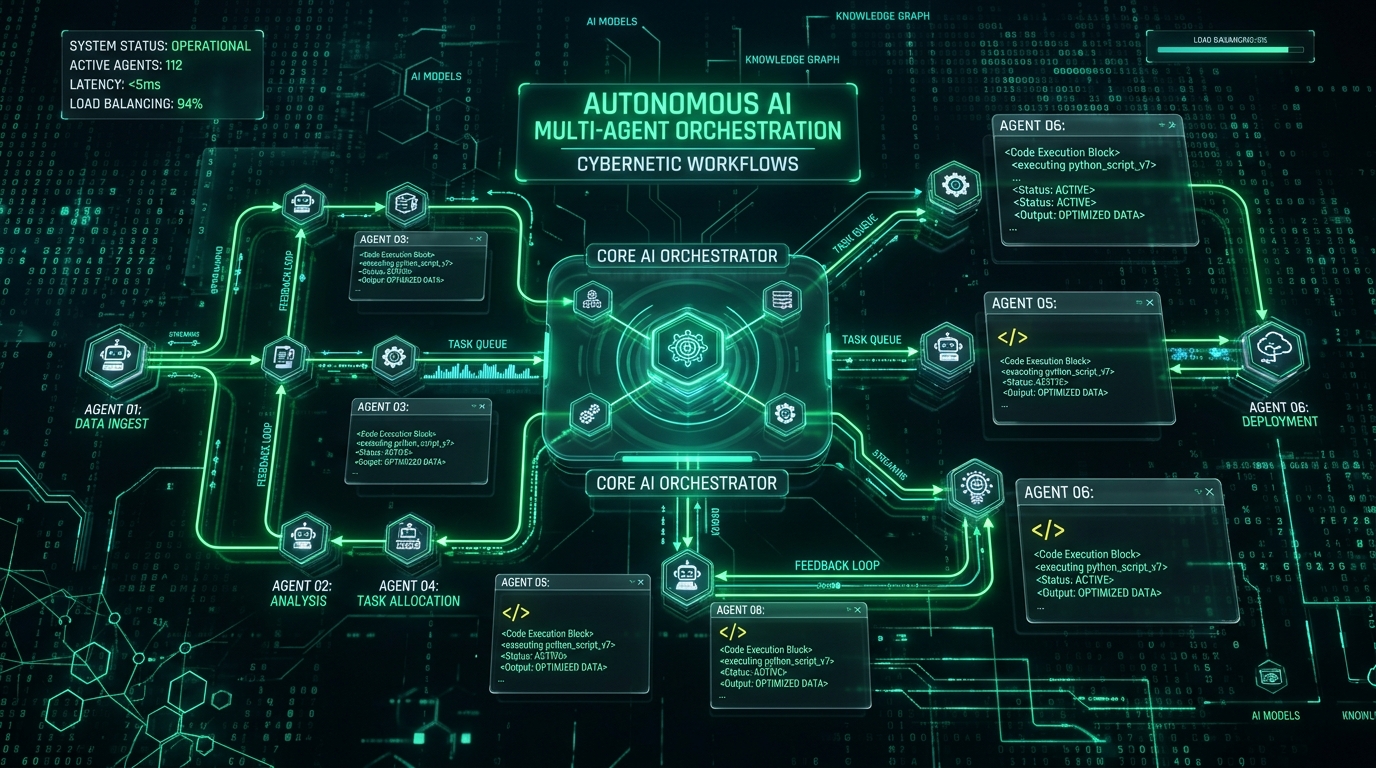
Chatbots answer questions; autonomous AI agents solve complex multi-system operational problems. The transition from passive conversational assistants to proactive, goal-driven agentic architectures represents the single biggest technological leap in software since the introduction of the cloud. An enterprise-ready autonomous agent requires three fundamental architectural components: • Hierarchical Task Decomposition: Breaking abstract, high-level business objectives (e.g. 'Scrape, reconcile, and audit monthly financial reports against Stripe ledger') into Directed Acyclic Graphs (DAGs) of discrete, executable micro-tasks. • Tool Calling & Sandboxed Execution: Equipping models with strictly typed OpenAPI schema definitions, SQL query planners, and sandboxed Python execution environments with deterministic parameter validation. • Stateful Reflection & Error Recovery: Implementing self-critique loops where agents inspect intermediate execution outputs, detect runtime discrepancies, and iteratively self-correct code execution without requiring human intervention. When properly architected with stateful event loops and strict security guardrails, AI agents compress multi-hour manual operational workflows down to mere seconds.
Sarangan Raviraj
Contributor
VenomX Technology • Autonomous AI Studio